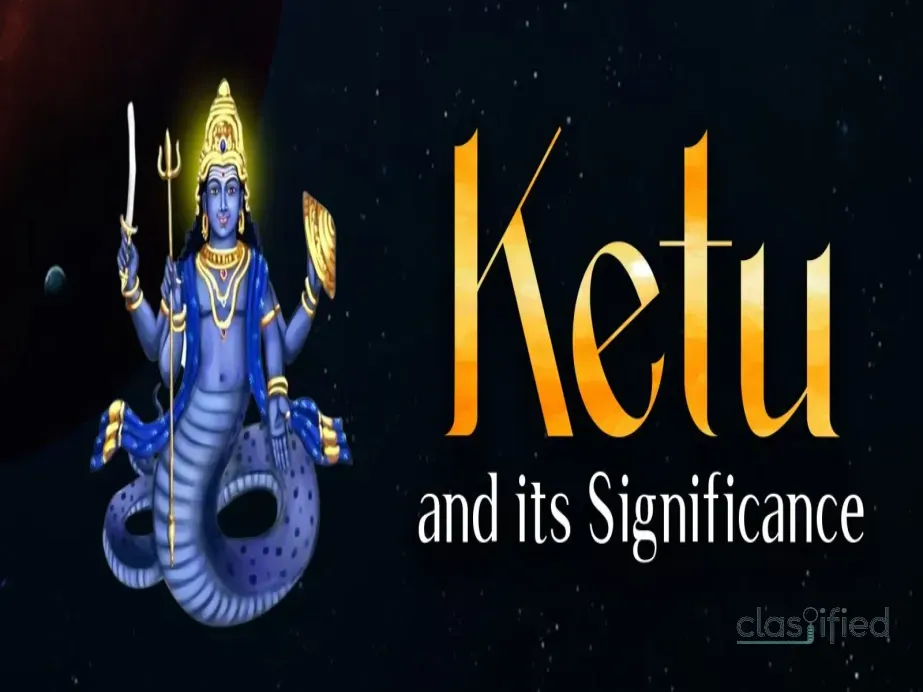
In Vedic astrology, Ketu is the south node of the Moon and is often considered a shadow planet—like its counterpart, Rahu (the north node of the Moon). While Rahu is linked to materialism, desire, and the external world, Ketu is associated with spirituality, detachment, and the inner realm. Ketu represents the process of letting go, and its influence leads to a deeper understanding of the self, often through experiences of loss, sacrifice, and surrender.
Spirituality and Liberation: Ketu is strongly connected to spiritual growth and the quest for moksha (liberation). Unlike Rahu, which pushes people toward material gains and external achievements, Ketu drives individuals toward inner wisdom, detachment, and seeking meaning beyond the material world. Its influence often encourages people to question the meaning of life, their purpose, and to seek deeper spiritual truths. Ketu is considered the planet of enlightenment, helping individuals transcend the ego and material desires.
Detachment and Renunciation: Ketu is the planet of detachment and renunciation. It represents the ability to let go of worldly attachments, often leading to a sense of freedom from materialism and superficial pursuits. People with a strong Ketu influence in their charts might feel an inner calling to simplify their lives, withdraw from the noise of the external world, and focus on spiritual practices such as meditation, yoga, or philosophical exploration.
Past Life Karma: In astrology, Ketu is said to represent past life karma—the actions, desires, and experiences that an individual carries from previous lifetimes. It signifies qualities, habits, and unresolved karmic lessons that need to be transcended or integrated in this lifetime. Ketu’s placement in the natal chart shows the areas where a person may have natural gifts or where they may feel a sense of unfinished business from the past. It also points to the need to release or transform old patterns that no longer serve the individual’s spiritual path.
Loss and Sacrifice: Ketu’s influence can manifest through experiences of loss, sacrifice, or letting go of attachments in life. These losses may not always be literal (such as losing a person or possession), but can manifest as a sense of inner emptiness or a yearning for something deeper. Ketu's energy compels individuals to release attachments in order to find peace and meaning, often bringing a sense of spiritual emptiness that leads to profound inner growth.
Mysticism and Intuition: Ketu is often associated with mysticism, psychic abilities, and intuition. It governs the unconscious mind and the more subtle realms of existence. Ketu's influence can enhance intuitive faculties, clairvoyance, or interest in esoteric subjects such as astrology, occult sciences, or meditation. People with Ketu strongly placed in their charts might have a deep connection to the unseen world and an innate understanding of hidden truths.
The Shadow of the Ego: While Rahu amplifies the ego and the desire for external recognition, Ketu works on breaking down the ego. It represents the process of disillusionment, showing individuals that material accomplishments and external validation are not the ultimate sources of happiness. Ketu helps diminish the attachment to personal identity and encourages selflessness and humility. This can lead to a reduction in pride, vanity, or any unhealthy attachment to fame, status, or possessions.
Unfinished Business and Past Life Memories: Ketu's position in the birth chart reveals areas of unfinished business or areas where a person may carry unresolved past life memories or karmic baggage. These unresolved matters often require healing, integration, or release in this lifetime. The influence of Ketu often manifests as a feeling of nostalgia, loss, or confusion about one's deeper purpose in life.
Unexpected Changes and Sudden Releases: Ketu can bring about sudden changes and unexpected releases in a person’s life, often causing upheaval in the areas of life represented by the house Ketu occupies. These changes are typically meant to reveal the illusion of attachment and push individuals toward greater detachment or spiritual awakening. For example, if Ketu is in the 7th house of relationships, there may be unexpected separations, a tendency to withdraw emotionally, or a need to transcend personal attachments to people.
Surrender and Spiritual Growth: Ketu is associated with the concept of surrender—the ability to let go of control and trust in the divine or the flow of life. It helps individuals develop a spiritual perspective on life's challenges, encouraging them to release their desire for control and to trust in the higher purpose behind events. This process of surrender often leads to spiritual growth and the realization that peace comes from within, not from external circumstances.
Rahu and Ketu are always in opposition, representing the yin and yang, the balance between the material world (Rahu) and the spiritual world (Ketu). While Rahu urges an individual to seek fulfillment in the external world, Ketu pushes them toward inner satisfaction and detachment. The interplay between these two nodes can show the tension between worldly desires and spiritual fulfillment, as well as the integration of both in a balanced life.
In Vedic astrology, Ketu’s influence can sometimes be challenging due to its spiritual nature and tendency to bring confusion, loss, or feelings of emptiness. There are several remedies to mitigate its effects:
Ketu in astrology is a planet of spiritual enlightenment, detachment, and karmic lessons. Its influence may bring challenges related to loss, separation, and inner turmoil, but these are often the means by which individuals are forced to seek higher truths and greater spiritual understanding. Santan Prapti Astrology in Ahmedabad. Ketu teaches the value of letting go, surrendering, and seeking peace within, making its influence vital for personal and spiritual evolution. It pushes individuals toward realizing the impermanence of the material world and embracing deeper spiritual fulfillment.